
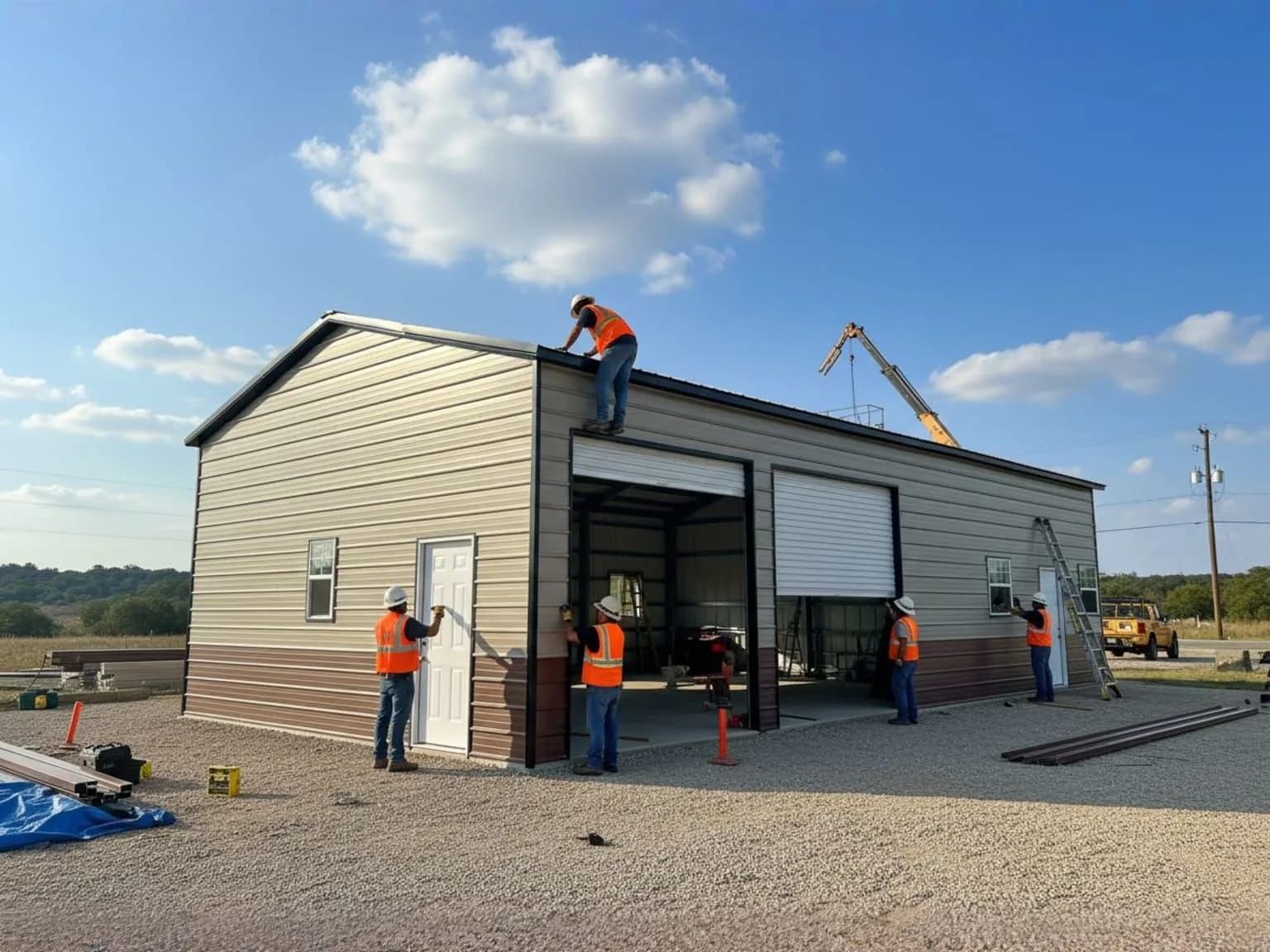
Concrete & Foundation Guide for Steel Buildings
Everything you need to know about concrete slabs for metal buildings in North Texas. Specs, costs, soil tips, and step-by-step preparation.
Do You Need a Concrete Foundation for a Steel Building?
Short answer: It depends on the size. Smaller portable steel buildings (up to about 24x30) can sit on a gravel pad or level ground with anchors. Larger buildings (30 feet wide and up) and any building that requires a permit need a concrete slab foundation.
In North Texas, a properly reinforced concrete slab costs about $9 to $11 per square foot. A 30x40 slab runs roughly $10,800 to $13,200 depending on thickness, reinforcement, and soil conditions. The slab must match the exact building frame dimensions and cure for at least 5 to 7 days before installation.
When Do You Need a Concrete Foundation?
Not every steel building needs a concrete slab. Here is a quick guide to help you decide.
Portable steel buildings that sit on ground anchors or a gravel pad:
- Buildings up to about 24x30 (720 sq ft)
- Simple storage, parking, or equipment cover
- Gravel or dirt floor works for your use case
- You might want to move the building later
- Located outside city limits with no permit required
Larger buildings and any project requiring a permit:
- Buildings 30 feet wide and larger
- Any built-on-site construction project
- Workshop, garage, or commercial use needing a clean floor
- Inside city limits where a building permit is required
- Barndominium or any building with living space
- You plan to park heavy vehicles or equipment inside
Concrete Slab Specifications
Two specification tiers based on your building size and use. Both include a perimeter beam for anchoring the steel frame.
Good for storage and light-use buildings
4-inch thick slab
Standard thickness for light loads
3,500 PSI concrete
Recommended minimum strength rating
Welded wire mesh reinforcement
6x6 W1.4/W1.4 standard mesh
12"x12" perimeter beam
Industry standard for buildings under 30' wide
Vapor barrier required
6-mil poly sheeting under slab
~$9.23 / sq ft
Flat lot, North Texas pricing
Best for garages, workshops, and heavy use
6-inch thick slab
Handles vehicles and heavy equipment
3,500 PSI concrete
Higher strength for demanding use
Rebar on 18-inch grid
#4 rebar both directions for max strength
12"x12" perimeter beam (24" deep for clay soil)
Deeper beam resists soil expansion
Vapor barrier required
6-mil or 10-mil poly sheeting
~$10.38 / sq ft
Flat lot, North Texas pricing
Perimeter Beam Requirements by Building Width
Under 30' Wide
12" x 12"
Industry standard perimeter footer. Covers most residential steel buildings.
32'+ Wide (Double/Ladder Leg)
30" x 26"
Engineered spec recommended. Wider buildings put more stress on the foundation.
Permitted Builds (Any Size)
Engineered
Engineer-stamped plan required. WF minimum: 24"x24" regardless of building size.
Concrete Slab Cost Estimates
Estimated costs for popular steel building sizes in North Texas. Based on flat lots with standard site prep.
| Building Size | Square Feet | 4" Slab Est. | 6" Slab Est. |
|---|---|---|---|
| 20x20 | 400 sq ft | $3,692 | $4,152 |
| 24x30 | 720 sq ft | $6,646 | $7,474 |
| 30x40 | 1,200 sq ft | $11,076 | $12,456 |
| 30x50 | 1,500 sq ft | $13,845 | $15,570 |
| 40x60 | 2,400 sq ft | $22,152 | $24,912 |
| 50x80 | 4,000 sq ft | $36,920 | $41,520 |
| 60x100 | 6,000 sq ft | $55,380 | $62,280 |
These are estimates, not quotes
Actual costs depend on soil conditions, site access, grading needs, and your concrete contractor. Sloped lots, rocky ground, or sites requiring significant fill will cost more. We can connect you with trusted local concrete contractors for an accurate bid.
North Texas Soil & Your Foundation
The soil under your building matters more than most people think. North Texas has unique challenges.
Much of the Denton and Wichita Falls area sits on expansive clay soil, locally known as "black gumbo." This soil swells when wet and shrinks when dry, creating a cycle that can crack and shift concrete slabs over time.
How to protect your foundation on clay soil:
- Use a deeper perimeter beam (24 inches deep instead of 12 inches)
- Grade the site properly so water drains away from the slab
- Use the 6-inch slab spec with rebar grid for added rigidity
- Install a proper vapor barrier to manage moisture migration
- Consider post-tension cables for very large buildings on severe clay
- Maintain consistent moisture levels around the foundation after installation
Parts of the region (especially west of Wichita Falls and some areas of Denton County) have sandier soil that drains well and stays more stable. If you are lucky enough to have this soil type, you can often use the standard 12-inch perimeter beam even in clay-dominant areas.
Not sure what kind of soil you have? A simple geotechnical test (usually $300 to $500) tells you exactly what is under your site. This is money well spent on larger projects.
How to Prepare a Concrete Slab for a Steel Building
Eight steps from permits to curing. Your concrete contractor handles most of this, but knowing the process helps you ask the right questions.
Check local permit requirements
Contact your city or county building department to find out if your steel building requires a permit and what foundation specifications are required. Buildings inside city limits almost always need a permit and engineered foundation plan.
Get your building dimensions
Order your steel building first or get a confirmed quote with exact frame dimensions. The concrete slab must match the building frame exactly. Do not guess or add extra inches.
Test your soil
For larger buildings or clay soil areas, a geotechnical soil test tells your contractor exactly what they are working with. This is especially important in North Texas where expansive clay (black gumbo) can cause foundation movement.
Grade and prepare the site
Clear vegetation, remove topsoil, and grade the pad area so water drains away from the slab on all sides. A properly graded site prevents water from pooling around your foundation.
Install the vapor barrier
Lay 6-mil or 10-mil polyethylene sheeting over the prepared sub-grade. Overlap seams by at least 6 inches. This prevents ground moisture from wicking up through the concrete.
Set forms and reinforcement
Build the forms to exact building dimensions. Place welded wire mesh or rebar grid per spec. Set the perimeter beam depth based on your soil type and building width (12-inch minimum, 24-inch for clay soils).
Pour and finish the concrete
Pour the concrete in one continuous session. Use 3,500 PSI concrete as the standard spec. Finish the surface smooth and level. Install anchor bolt sleeves or J-bolts per the building manufacturer specifications.
Cure for 5 to 7 days minimum
Keep the slab moist during curing (spray with water or cover with curing compound). Do not install the steel building or place heavy loads on the slab for at least 5 to 7 days. Cold weather may require longer cure times.
Total Timeline: About 2 Weeks
From site prep to a cured slab ready for building installation, plan on about 2 weeks. Most of that is curing time. The actual pour takes one day for a typical residential slab.
Common Foundation Mistakes to Avoid
We have seen these mistakes cost customers thousands of dollars. Learn from others and get it right the first time.
Making the slab too big
The slab must match the exact building frame dimensions. An oversized slab wastes money and leaves exposed concrete that collects water around the building edges.
Skipping the vapor barrier
Without a vapor barrier, ground moisture wicks up through the concrete. This causes dampness, mold, rust on tools and equipment, and can eventually damage the building itself.
Not allowing enough cure time
Installing a steel building on concrete that has not cured at least 5 to 7 days can crack the slab and compromise anchor connections. Rushing saves zero time in the long run.
Using a shallow perimeter on clay soil
A 12-inch deep perimeter beam on black gumbo clay is a recipe for movement. Go 24 inches deep on expansive soils. The extra cost is small compared to foundation repairs.
Pouring before ordering the building
Always confirm your exact building frame dimensions before pouring concrete. Even half an inch off can cause problems with anchor bolt alignment.
Ignoring site drainage
Water pooling around a slab accelerates soil movement and can undermine the foundation. Grade the site so water drains away on all four sides.
The Gravel Pad Alternative
Not every building needs concrete. For smaller portable steel buildings, a gravel pad is a solid, affordable option.
When a Gravel Pad Works
- Portable steel buildings up to about 24x30
- Simple storage, parking, or equipment cover
- You are outside city limits with no permit required
- Budget is a priority and the floor does not need to be smooth
- You may want to relocate the building in the future
How to Prep a Gravel Pad
- Clear the area of vegetation and debris
- Level the ground (should be flat within 3 inches over the full pad)
- Lay landscape fabric to prevent weeds
- Spread 4 to 6 inches of compacted crushed limestone or gravel
- Make the pad 2 feet wider than the building on all sides for drainage
Gravel pad cost: Roughly $1 to $3 per square foot depending on material and site prep. A fraction of the cost of concrete.
Permits & Your Foundation
If your building requires a permit, the municipality will specify foundation requirements. Most cities require an engineer-stamped foundation plan for steel buildings.
Wichita Falls requires a minimum 24"x24" footer for any permitted steel building. Denton and other cities have their own requirements. We help you understand what your area needs before you spend a dime on concrete.
Quick Answers About Concrete & Foundations
How much does a concrete slab cost for a steel building in Texas?
A concrete slab for a steel building in North Texas costs about $9 to $11 per square foot. A 24x30 slab (720 sq ft) runs roughly $6,600 to $7,500. A 30x40 slab (1,200 sq ft) costs $10,800 to $13,200. A 40x60 slab (2,400 sq ft) runs $22,000 to $25,000. The final cost depends on slab thickness (4 or 6 inches), reinforcement type (wire mesh or rebar), soil conditions, and site prep. The 6-inch slab with rebar is recommended for garages and workshops. At North Texas Shed & Steel, we connect you with trusted local concrete contractors and provide exact slab dimensions with every building order.
Do I need a concrete foundation for a metal building?
Not always. Smaller portable metal buildings up to about 24x30 can sit on a gravel pad or level ground with ground anchors. Larger buildings (30 feet wide and up), any built-on-site project, and buildings inside city limits that require a permit will need a concrete slab foundation. The slab must match the exact building frame dimensions. For North Texas, a 6-inch slab with 3,500 PSI concrete and rebar on an 18-inch grid is the recommended spec, especially on clay soils.
How thick should a concrete slab be for a metal building?
For North Texas steel buildings, we recommend a minimum 4-inch slab with 3,500 PSI concrete and welded wire mesh. For garages, workshops, and buildings that will hold vehicles or heavy equipment, a 6-inch slab with 3,500 PSI concrete and rebar on an 18-inch grid is recommended. The thicker slab costs about $1.15 more per square foot but handles heavier loads and resists cracking significantly better. Both specs require a vapor barrier underneath and a perimeter beam for anchoring the steel frame.
How long does concrete need to cure before installing a steel building?
Concrete needs a minimum of 5 to 7 days to cure before a steel building can be installed on it. This gives the slab enough compressive strength to handle the weight of the building and the stress of installation. Cold weather extends cure time. Hot, dry weather can cause the surface to cure too fast and crack. Your concrete contractor may recommend keeping the slab moist during curing or applying a curing compound.
We Do Not Pour Concrete, But We Help You Get It Right
North Texas Shed & Steel builds and installs your steel building. We do not pour concrete slabs ourselves. However, we provide exact slab dimensions with every order and can connect you with trusted local concrete contractors we have worked with on many projects.
When you get a quote from us, we walk you through the foundation requirements so you know exactly what to tell your concrete contractor. No surprises, no guesswork.
Get Steel Building Pricing in 24 Hours
Tell us what you need — we'll text or call the same business day with pricing, sizes, and availability.
Frequently Asked Questions
Ready to Start Your Steel Building Project?
Call either location for a free quote. We will walk you through foundation requirements, exact slab dimensions, and connect you with concrete contractors.
Mon-Fri 8:30am-5:30pm, Sat 8:30am-3pm